
Responsible hazardous waste management, safe chemical storage, and reducing environmental impact have always been vital for workplace safety, but tightening 2026 regulations are increasing the focus on environmentally-responsible chemical storage systems.
At first glance, this may feel like an extra burden. In reality, however, sustainable chemical storage solutions can enhance workplace safety, improve site management, support compliance with hazardous material regulations, and help in reducing environmental impact by preventing leaks and contamination.
At Safety Storage Systems, we understand the importance of sustainable, safe chemical storage and the challenges of meeting evolving compliance standards. In the following sections, we take a closer look at the latest compliance requirements, and the best practices you can implement to protect your operations, employees, and the environment.
Why Sustainable & Safe Chemical Storage Matters
From chemical emissions to hazardous waste, the handling and storage of chemicals can pose significant environmental risks. For businesses in Ireland, preventing leaks and spills is essential to protecting local waterways, soil and surrounding habitats.
Pollution occurs when harmful substances are released into water, land or air, potentially affecting drinking water supplies, wildlife and natural ecosystems. Some contaminants can persist for years, particularly PFAS, often referred to as “forever chemicals” because they resist breaking down in the environment.
As the focus on reducing environmental impact grows, businesses need to consider the regulations governing chemical use and management. Key areas include:
- PFAS Restrictions: EU measures are introducing a phased tightening of restrictions on PFAS-containing firefighting foams, with implications for how affected products are used, stored and disposed of.
- EU REACH & Chemical Safety: Irish companies manufacturing or importing chemical substances into the EU must comply with applicable EU REACH registration requirements. These generally apply from one tonne per substance per year, unless an exemption applies, and require information on chemical properties, uses, hazards and risks.
Appropriate chemical storage, effective spill containment, regular inspections and clear emergency procedures are practical steps towards reducing environmental risk. These measures help protect employees and the wider environment while supporting compliance and reducing the likelihood of costly clean-up operations.
What are the Most Common Causes of Environmental Risk?
While no company sets out to cause pollution, certain common issues can increase the risk of environmental harm.
Lack of Containment: Storing liquids without bunding or trays means leaks can flow directly into drains or soil, contaminating groundwater.
Poor Maintenance: Failure to spot container damage, or to maintain inventory in terms of shelf-life, storage conditions and compatibility can result in spills or fires.
Incorrect Segregation: Holding reactive, flammable, or corrosive chemicals together can cause violent reactions, fires, and toxic releases.
Inefficient Handling: Some transfer or decanting activities require a separate dedicated area with local exhaust and a specific spill containment system.
In many cases, issues relating to chemical storage and handling develop gradually. Perhaps equipment failures go unnoticed leading to minor leaks over time or incremental inventory changes lead to inadequate storage practices. Whatever the cause, potential environmental risks are often exacerbated by a lack of regular inspection, which means issues go undetected for far too long.
Reducing Environmental Impact with Storage Design
To minimise environmental risks at your facility, it is important to carefully consider how your chemicals are stored, handled and received.
In Ireland, employers must comply with the Safety, Health and Welfare at Work (Chemical Agents) Regulations, as amended. These require employers to assess the risks associated with hazardous chemical agents and implement measures to prevent or control exposure.
The location of your chemical storage area also plays an important role in reducing environmental impact. Choose a location that minimises the risk of vehicle collisions and keeps potential spills away from drains, watercourses and neighbouring properties. Assess flood risk when positioning storage units and provide suitable protection where necessary.
The Health and Safety Authority’s guidance on chemical risk assessment provides advice on safe storage, handling and emergency arrangements. Practical measures include:
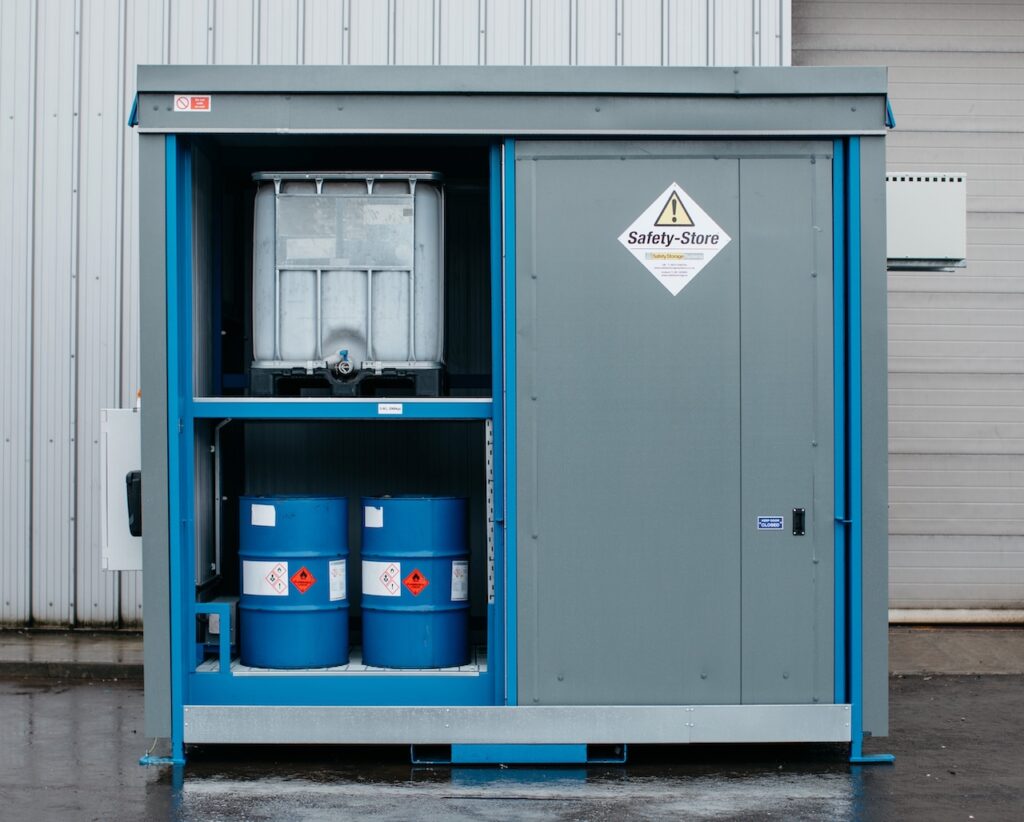
Spill Containment: Use suitable bunded pallets and storage units to capture leaks and spills. A commonly used bund capacity guideline is 110% of the largest container’s capacity or 25% of the total capacity of all containers stored, whichever is greater. Check any site-specific environmental licence conditions and allow for additional capacity where needed. Keep spill kits and suitable drain covers readily accessible to help prevent chemicals from entering drainage systems.
Durable Storage: Select storage cabinets and units made from materials or protective finishes compatible with the chemicals being stored. Appropriate corrosion resistance, regular inspections and maintenance help prevent deterioration, reduce the risk of leaks and extend equipment lifespan.
Efficient Layout: Design your storage area to minimise unnecessary handling and reduce the risk of damage or spills during transport. Clearly marked areas for receiving, storing and dispensing chemicals help keep access routes clear and reduce accidents. Segregate incompatible chemicals in line with their safety data sheets.
Balancing Safety, Compliance and Sustainability
Safe, well-designed chemical storage can help prevent environmental damage while improving on-site safety. In Ireland, responsible chemical storage supports compliance with the Safety, Health and Welfare at Work (Chemical Agents) Regulations, as amended, which require employers to assess chemical risks and implement measures to prevent or control exposure.
Investing in appropriate storage can also deliver practical and economic benefits. Preventing leaks and containing spills helps reduce the risk of contamination, costly clean-up work and disruption to operations.
Maintaining the correct storage conditions can also help preserve material quality and reduce avoidable waste. For temperature-sensitive materials, this means keeping them within the conditions specified for safe storage and use.
For example, Safety Storage Systems worked with a medical dressings manufacturer in Sligo to design a temperature-controlled chemical IBC store. The client needed to store eight IBCs of gel at 30°C to keep it workable for production.
The insulated, bunded store incorporated full temperature control, data logging and alarms to alert staff if temperatures moved outside the set parameters. As the gel releases hazardous vapours when exposed or spilled, the doors were fitted with interlocks that only release after an extract fan has run for a preset time to purge the store of vapours.
By combining temperature control, spill containment and controlled access, the solution addressed the client’s production needs while helping reduce risks to employees and the surrounding environment. It demonstrates how purpose-designed chemical storage can support safer working practices and more efficient use of materials.
Best Practice Storage Behaviours
Alongside storage design there are various operational best practices that will help in reducing environmental impact and improving overall site safety:
Regular Inspections and Maintenance: Conduct routine inspections of storage areas and containers to identify leaks, corrosion, or damage before they become serious issues.
Inventory Management: Maintain accurate chemical inventories to reduce excess storage, prevent expired materials from accumulating, and ensure substances are stored safely. Effective inventory control also supports compliance reporting and risk management.
Staff Training: Provide employees with regular training on chemical handling, storage procedures, emergency response, and environmental safety protocols.
Spill Prevention and Response: Implement spill containment measures and ensure clear emergency response procedures are in place. Rapid response to leaks or spills can significantly reduce environmental damage, protect employees, and minimise operational disruption.
How Storage Systems Support Long-Term Sustainability
As outlined above, best-practice measures demonstrate how chemical storage plays a vital role in both long-term operational safety and the achievement of sustainability goals. Rather than being separate challenges, the two are closely interconnected.
As a result, a well-designed and safe storage unit can simultaneously help your business to prevent environmental incidents, maintain compliance with increasingly strict regulations, and support safer, more efficient operations.
At Safety Storage Systems, we understand the need for chemical storage infrastructure that supports your sustainability strategy and underpins safety and compliance at your facility. Our durable, bunded cabinets are designed to protect both employees and surrounding ecosystems from hazardous substances.
Speak to Our Storage Experts
If you would like advice on how chemical storage infrastructure can help you achieve your sustainability and safety goals simultaneously, get in touch with our team for expert guidance on compliant, environmentally responsible storage solutions.